
How to Remove Limescale from Bathroom Tiles and Faucets at Home

Cleaning guides · Made in Lebanon
How to Remove Limescale from Bathroom Tiles and Faucets at Home
A practical, step-by-step guide to dissolve hard-water buildup safely — and keep chrome, ceramics, and glass looking new with Magic Touch deep-cleaning products from Lebanese Journey.
If you live in Lebanon — or anywhere with hard water — you already know the chalky white crust that clings to bathroom tiles, shower doors, taps, and toilet bowls. That residue is limescale: mineral deposits (mainly calcium and magnesium carbonate) left behind when water evaporates. It dulls shiny fixtures, clogs shower heads, and makes bathrooms look older than they are. The good news: you do not need harsh industrial acid or expensive call-outs to fix it. With the right method and a purpose-built limescale remover, you can restore surfaces at home in one focused session.
This guide walks you through a complete home routine used by households that trust Magic Touch by Lebanese Journey — professional-grade cleaning made in Lebanon since 2019. You will learn what limescale is, how to prepare the bathroom, how to treat tiles and faucets without scratching chrome, how to finish glass and grout, and how to prevent buildup so you clean less often. By the end, your bathroom should feel brighter, smell fresher, and stay easier to maintain.
Why limescale forms so quickly in Lebanese bathrooms
Hard water contains dissolved minerals. When droplets dry on a warm tile or metal faucet, those minerals crystallize into a stubborn film. Showers accelerate the cycle: heat, steam, and frequent wetting create perfect conditions for scale. Over weeks, a thin haze becomes a rough crust that soap scum sticks to — so the bathroom looks dirty even after a quick wipe.
Vinegar alone sometimes softens light haze, but thick scale on chrome and ceramic often needs a stronger, targeted formula designed for bathroom minerals. That is where a dedicated deep-cleaning and limescale product outperforms kitchen shortcuts. Magic Touch formulas are built for real household water conditions and everyday Lebanese homes — tough on mineral deposits, practical for weekly or monthly routines.
Safety first: Always work in a ventilated bathroom, wear gloves if you have sensitive skin, keep products away from children, and never mix different chemical cleaners in the same bucket or spray bottle.
What you need before you start
- A Magic Touch limescale remover such as Limescale & Rust Spray 500ML, plus optional Deep Cleaning Multi Purpose 500ML for general bathroom wipe-downs
- Microfiber cloths (at least two: one for applying, one for drying)
- An old soft toothbrush or non-scratch nylon brush for faucet bases and grout lines
- Warm water and a small bucket or spray bottle for rinsing
- Optional: a plastic scraper for thick crust on glass (never metal on chrome)
Clear the shower of bottles and hanging cloths so you can reach every corner. Dry standing water with a towel first — product works better when it contacts scale directly instead of sitting in puddles.
Step-by-step: remove limescale from bathroom tiles
-
Rinse and map the worst zones
Lightly rinse tiles with warm water. Note white rings around fixtures, cloudy patches on wall tiles, and rough spots near the shower floor. Focus dwell time on those areas rather than spraying the entire room blindly.
-
Apply limescale remover evenly
Spray or wipe Magic Touch limescale remover onto the mineral film. Keep a consistent wet layer — thin mist that dries instantly will underperform. On vertical tiles, work in sections so the product does not run dry before it reacts.
-
Allow proper contact time
Let the formula sit for the time recommended on the label (typically a few minutes). You should see the chalky layer soften or look wetter and looser. Do not let strong removers dry into a powder on dark tiles; keep the surface moist or re-mist lightly.
-
Agitate gently, then rinse
Wipe with a microfiber cloth using firm, overlapping strokes. For textured tiles and grout edges, use the soft brush. Rinse thoroughly with clean water so no residue remains, then dry with a second cloth to stop new water spots from forming immediately.
How to clean limescale from faucets and chrome without scratches
Faucets and shower mixers show every water mark. The mistake most people make is scrubbing chrome with abrasive pads. That creates permanent swirls. Instead, saturate a cloth with limescale remover, wrap it around the spout and handles for a short dwell, then wipe along the grain of the metal. For the base where scale rings form, dip the toothbrush in product and circle lightly until the white ring lifts. Rinse and buff dry until the metal looks reflective again.
Shower heads benefit from the same chemistry: unscrew if possible and soak the faceplate, or bag-wrap the head with a remover-soaked cloth. Mineral plugs in the nozzles often release after one or two treatments, restoring water pressure and spray pattern.
Glass shower doors, mirrors, and silicone edges
Glass holds a foggy mineral film that looks like soap scum but feels gritty. Apply remover, wait, wipe in vertical passes, rinse, and dry completely. Drying is half the battle — leaving wet glass recreates spots within hours. Along silicone seals, use the soft brush carefully so you clean the scale without tearing the sealant. If silicone is already black with mold, treat mold separately after minerals are gone; mixing jobs in one pass usually leaves streaks.
Grout lines and floor tiles near the shower
Grout is porous. Scale and soap combine into a grey film that makes white grout look permanently dirty. After treating wall tiles, re-apply a controlled amount of remover along grout, brush along the line (not across, which spreads paste onto clean tile), rinse well, and dry. On floor tiles at the shower threshold — where water pools — schedule a slightly longer dwell. Those zones collect the heaviest deposits in Lebanese apartments with daily showers.
A simple prevention routine (so you clean less)
You will never fully stop minerals if your water is hard, but you can slow the visible buildup:
- Squeegee glass and wipe chrome after the last shower of the day
- Once a week, give high-splash zones a quick Magic Touch mist and wipe
- Once a month, repeat the full tile-and-faucet session above
- Fix dripping taps — constant drips create thick rings that need aggressive removal later
Prevention takes two minutes daily and saves a heavy scrubbing day every weekend. Pair it with other Magic Touch bathroom habits — odor control and stain care elsewhere in the home — for a complete Lebanese Journey cleaning system.
Best Magic Touch products to remove bathroom limescale
People searching for “how to remove limescale from bathroom tiles”, “limescale remover for faucets”, or “clean hard water stains on shower” usually need a single-purpose bottle — not a mixed bundle. These Lebanese Journey products each do one clear job:
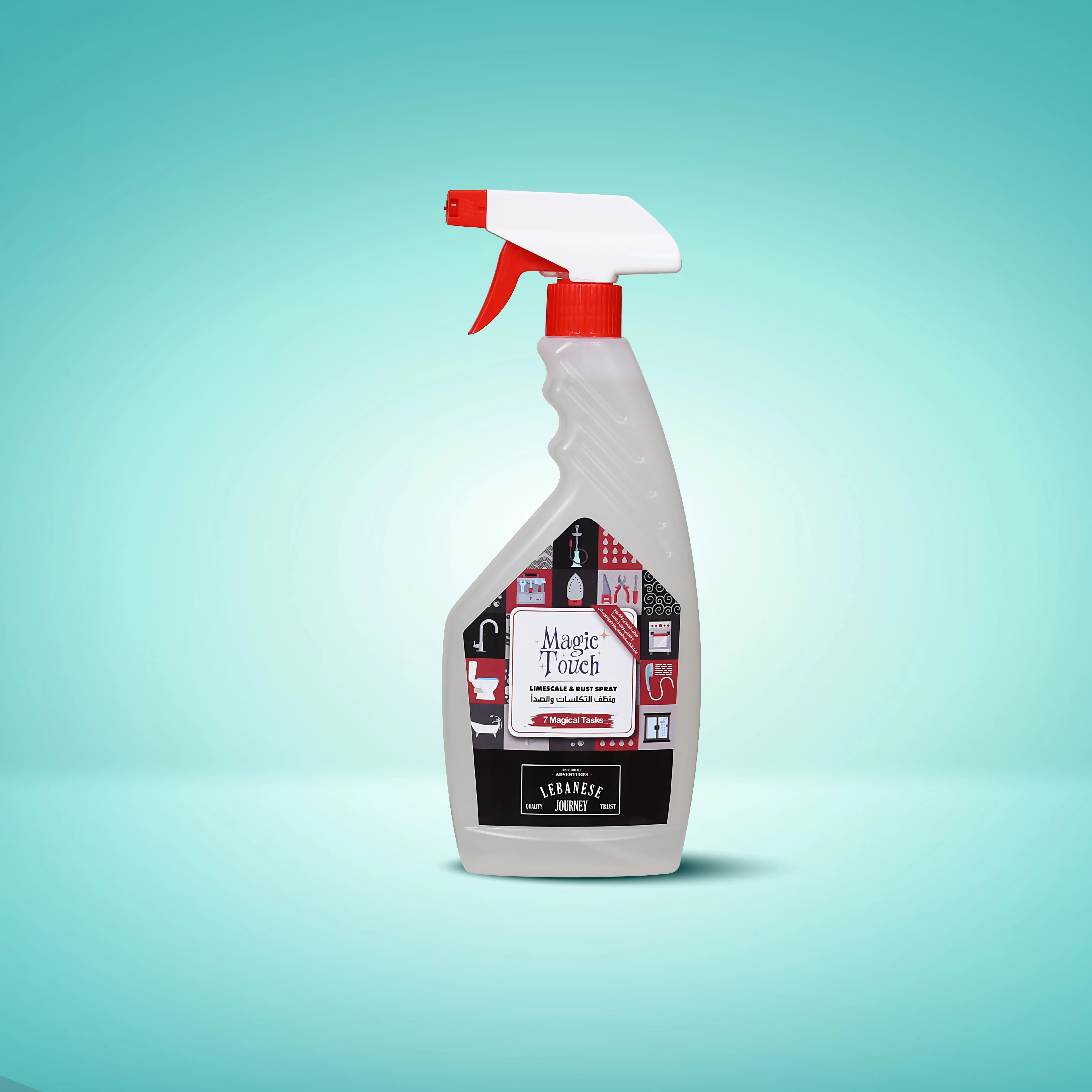
Limescale & Rust Spray 500ML
$7.00
Shop now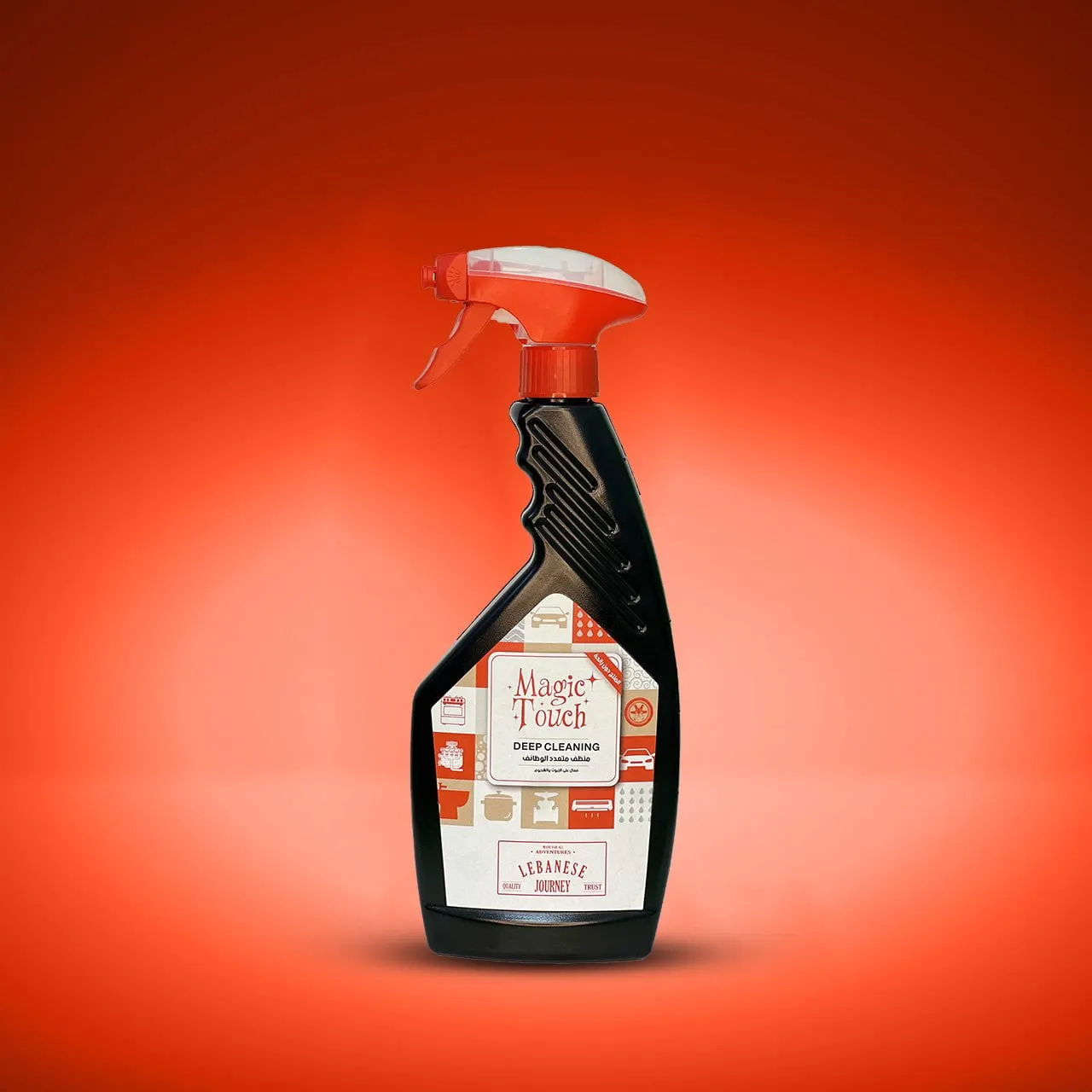
Deep Cleaning Multi Purpose 500ML
$6.00
Shop now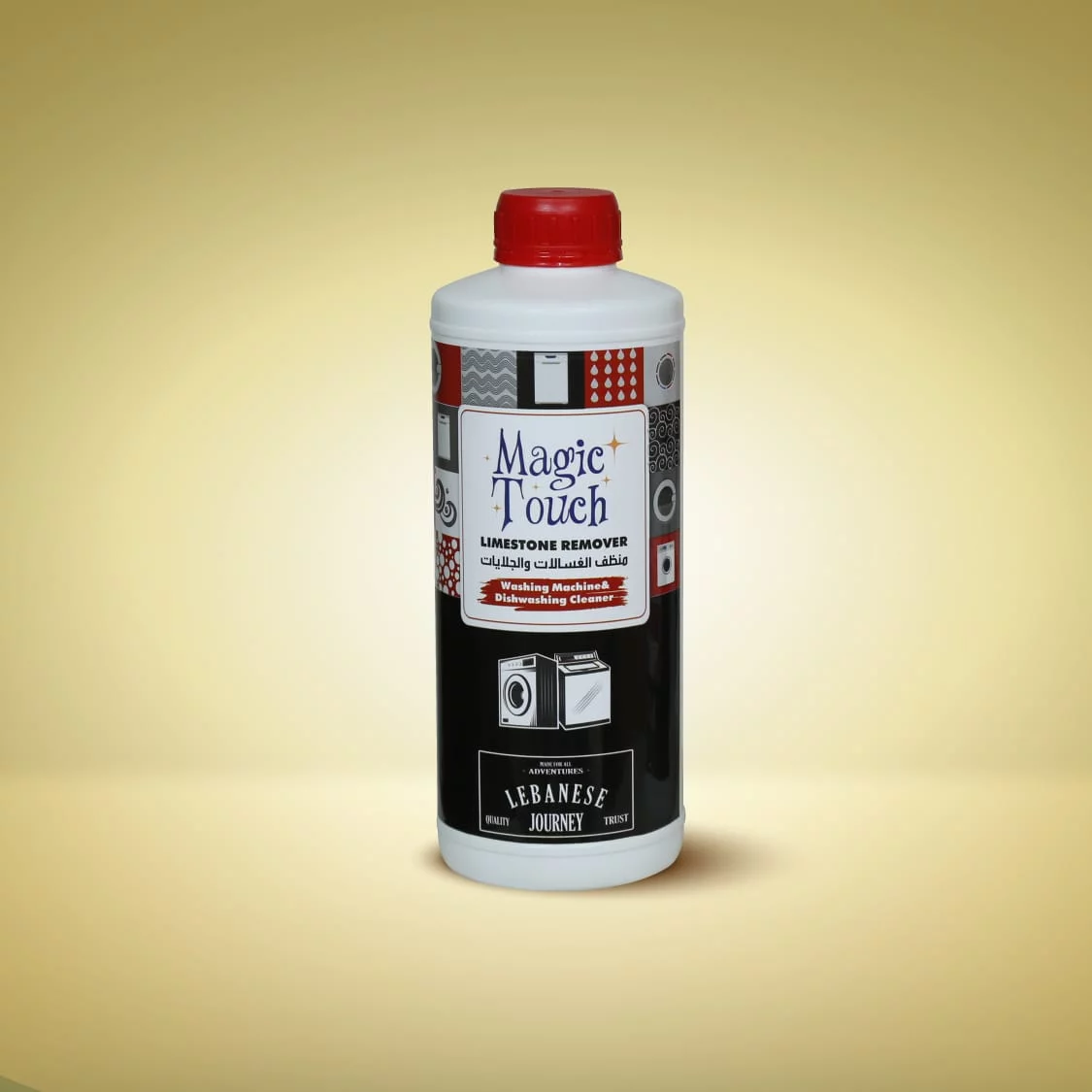
Washing Machine Cleaner — Limestone
$7.00
Shop nowUse the Limescale & Rust Spray on tiles, faucets, and shower glass. Keep Deep Cleaning Multi Purpose for weekly bathroom wipe-downs after scale is under control. Use the Washing Machine Cleaner (Limestone) when hard water also leaves deposits inside your laundry machine — a related search many Lebanese households make after fixing bathroom scale.
Common mistakes that leave limescale behind
- Skipping dwell time — wiping instantly wastes product
- Using metal scrapers on chrome — permanent scratches
- Not rinsing — residue attracts new dirt
- Leaving surfaces wet — fresh mineral spots overnight
- Mixing cleaners — unsafe fumes and ruined finishes
Frequently asked questions
Is limescale the same as soap scum?
No. Soap scum is mostly body oils and soap residue. Limescale is mineral. They often layer together, which is why bathrooms look dull. Removing minerals first makes soap film easier to wipe afterward.
Can I use the same remover on natural stone?
Be careful. Many acid-based limescale removers are intended for ceramic, porcelain, glass, and chrome — not marble or limestone. Always check the label. If unsure, test a hidden corner or use a stone-safe method instead.
How often should I deep-clean bathroom limescale?
In hard-water areas, a monthly deep clean plus a weekly wipe usually keeps fixtures bright. Homes with very hard water or large families may need a bi-weekly focus on the shower zone.
Will Magic Touch products damage chrome?
Used as directed — contact time, soft cloth, rinse, dry — chrome should look clearer, not scratched. Avoid abrasive pads and never leave strong product drying unattended on delicate finishes.
Final checklist before you put the cloths away
Walk the bathroom once more: tiles free of chalky haze, faucet bases without white rings, glass clear when dry, floor threshold rinsed, and ventilation left on for a few minutes. Store your Magic Touch limescale remover within easy reach of the bathroom so the next maintenance wipe actually happens. Small consistency beats rare marathon cleans.
Lebanese Journey built Magic Touch for exactly these everyday battles — stains, scale, laundry, dishes, car care — with local manufacturing pride and a straightforward promise: professional-grade results you can feel at home. When your bathroom fixtures catch the light again, you will see why a dedicated limescale routine is worth the half hour.
Ready to clear the scale?
Shop Magic Touch limescale and deep-cleaning products — made in Lebanon, built for real homes.
Shop limescale & deep cleaning